I read the study so you don’t have to: what this AUD “endocannabinoid gene rewiring” paper actually means for clinical practice
Decades of alcohol use do not simply create bad habits. They reshape the brain systems responsible for reward, impulse control, and decision-making. This article breaks down a dense neuroscience study on alcohol use disorder and the endocannabinoid system and translates it into practical, clinician-friendly insight. If you have ever wondered why motivation alone fails, why relapse risk spikes under stress, or why structure matters more than willpower early in recovery, this is the neuroscience that helps explain why.
I read the neuroscience so you don’t have to
Every few months, a study comes along that clinicians quietly sense is important, even if it is not immediately practical. This is one of those studies.
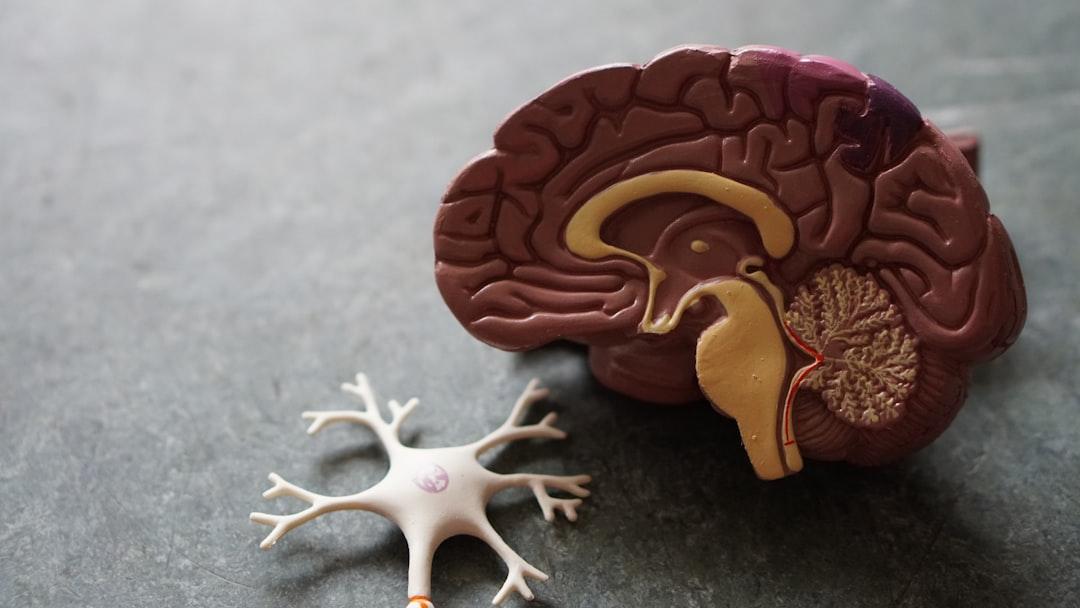
In December 2025, researchers published a postmortem human brain study examining how decades of alcohol use are associated with changes in gene expression within the endocannabinoid system. Specifically, they looked at two core brain regions that every addiction clinician already knows well, even if we do not usually talk about them in molecular terms: the prefrontal cortex and the nucleus accumbens.
These are the brain areas that handle judgement, impulse control, reward learning, habit formation, and relapse vulnerability. In other words, the exact places where clinicians see things fall apart when stress rises and insight alone is not enough.
This paper does not offer a new treatment. It does not provide a miracle medication. What it does offer is something arguably more useful: biological confirmation of what clinicians have been observing for years.
What makes this study different from most addiction neuroscience
Most addiction neuroscience relies on animal models, imaging studies, or mixed substance use samples. This study did something rarer and more uncomfortable. It examined postmortem brain tissue from people who had lived with alcohol use disorder for an average of thirty five years and who did not have other substance use disorders.
That matters. It reduces a major confound and allows us to talk more clearly about alcohol itself rather than “polysubstance effects” or short term exposure.
The researchers focused on the endocannabinoid system, a regulatory network that modulates reward, stress response, emotional regulation, and executive functioning. If dopamine is the gas pedal of addiction, the endocannabinoid system is part of the volume and sensitivity control that determines how loud and urgent reward signals feel.
They measured gene expression related to cannabinoid receptors and enzymes in the prefrontal cortex and nucleus accumbens. Importantly, this study measured gene expression, not behavior, not self report, not symptoms. This is biology at the transcription level.
What they found, in human terms
The most striking pattern was imbalance.
In people with long term alcohol use disorder, the genes associated with the CB1 receptor were expressed at much higher levels in both the prefrontal cortex and the nucleus accumbens. CB1 is closely tied to reinforcement learning and relapse vulnerability. Higher expression here suggests a brain that is primed to strongly encode alcohol related reward signals.
At the same time, expression of the CB2 receptor was substantially lower in both regions. CB2 is often associated with neuroprotective and anti inflammatory processes. Lower expression suggests weakened internal buffering against alcohol related neural stress and damage.
What surprised even the authors was how inconsistent the direction of change was across brain regions for other components of the system. The receptor GPR55 was higher in the prefrontal cortex but dramatically lower in the nucleus accumbens. The enzyme FAAH, which breaks down anandamide, was lower in the prefrontal cortex and higher in the nucleus accumbens. MGLL, which regulates a different endocannabinoid, was unchanged in the prefrontal cortex but reduced in the nucleus accumbens.
This was not a global up or down shift. It was region specific rewiring.
From a clinical perspective, that matters more than it might sound. It suggests that the brain systems responsible for braking behavior and the systems responsible for reinforcing habits are not changing in parallel. They are adapting differently, and sometimes in opposite directions.
What may surprise clinicians the most
Many clinicians expect addiction neuroscience to tell a simple story. Alcohol damages the brain. Control goes down. Reward goes up. This study complicates that narrative.
The changes were not uniform. Some systems were amplified in one region and dampened in another. Some protective mechanisms appeared reduced while reinforcement mechanisms were enhanced. That complexity mirrors what clinicians see in real people. A client may show insight, remorse, and planning ability one moment, then act impulsively and seemingly irrationally the next.
Another surprise is that CB1 gene expression was higher, even though some imaging studies have suggested reduced CB1 receptor availability in people with alcohol dependence. This is not a contradiction so much as a reminder that gene expression, receptor availability, and functional signaling are different biological layers. The brain may be producing more of a receptor while simultaneously regulating its availability or responsiveness in complex ways.
Finally, this study quietly challenges the idea that abstinence alone quickly restores neural balance. These brains reflect decades of adaptation. There is no reason to expect rapid normalization simply because drinking stops.
How this neuroscience can support your clinical practice
You do not need to explain cannabinoid receptors to clients for this study to be useful.
Where this paper earns its keep is in how it supports a different clinical posture.
- Relapse vulnerability isn’t primarily a moral or motivational failure. The brain systems responsible for reward and impulse control appear biologically altered after long term alcohol exposure.
- Externalized relapse prevention. Under stress, plans should rely less on insight and more on structure—environment, routine, accountability, and early intervention become treatment, not micromanagement.
- Sleep, mood, and stress are core targets. Treating anxiety or depression is not ancillary to recovery; it can reduce relapse biology.
- Continuing care matters. A brain adapted over decades does not reorganize on a discharge timeline—this supports longer-term models and step-down supports.
What this study does not claim
This was a small, exploratory study. It included only male subjects. Some participants had comorbid depression. Causality cannot be inferred. Gene expression does not equal behavior, and it does not automatically point to a specific medication.
But dismissing the findings because of those limits would miss the point. This is one of the clearest demonstrations we have, using human brain tissue, that long term alcohol use is associated with deep, region specific biological changes in systems that regulate reward and control.
The takeaway clinicians can trust
This study does not say that people with alcohol use disorder cannot change. It says that change requires more than insight, motivation, or discipline.
Recovery asks the brain to relearn how to regulate reward and control after years of adaptation to alcohol. That takes time, structure, compassion, and realistic expectations.
In that sense, this paper does not radically change good clinical practice. It validates it. And sometimes, that is exactly what clinicians need.